

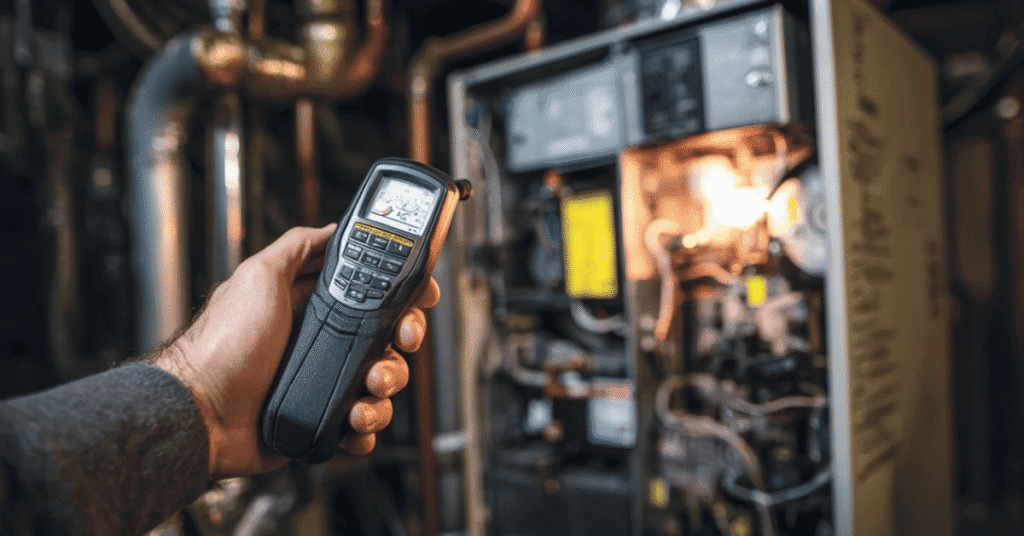
While furnaces make some normal operational sounds during heating cycles, certain noises are red flags that something’s seriously wrong. Ignoring these warning signs can lead to expensive repairs, complete system failure, or safety hazards like carbon monoxide leaks or fire risks.
After years of servicing heating systems across Livonia, Comfort Craftsman Heating and Cooling has responded to countless emergency calls that could have been prevented if homeowners had recognized these warning sounds earlier. Let’s walk through seven furnace noises you should never ignore and what each sound could mean for your heating system.
1. Banging or Booming Sounds
If your furnace sounds like someone’s slamming a hammer inside when it fires up, you’ve got a problem called delayed ignition. This happens when gas builds up in the combustion chamber before igniting all at once, creating that explosive loud bang.
Why this banging noise happens:
- Dirty or clogged furnace burners prevent proper gas flow
- Gas valve issues causing irregular fuel delivery
- Improper air-to-fuel mixture during ignition
The real danger isn’t just the startling noise. Delayed ignition puts enormous stress on your heat exchanger, the component that separates combustion gases from the air circulating through your home. A cracked heat exchanger is dangerous because it can leak carbon monoxide into your living space.
What you should do: Turn off your furnace immediately at the thermostat and emergency shut-off switch. Don’t attempt to restart it. Contact Comfort Craftsman Heating and Cooling for professional furnace repair right away.
2. Screeching or Squealing
That high-pitched squeal coming from your furnace sounds exactly like what it is: metal grinding against metal. This noise could point to problems with your blower motor or the belt that connects it to the fan. These squealing noises typically indicate blower motor bearings wearing out over time.
Left unaddressed, a squealing motor will eventually seize up completely, leaving you without heat on the coldest night of the year. Schedule furnace repair before the motor gives out entirely. Replacing worn bearings or a damaged belt during routine furnace maintenance is relatively straightforward and affordable compared to replacing an entire blower motor.
3. Rumbling That Won’t Stop
A regular furnace should stop making noise shortly after the burners shut off. If you hear a low, continuous rumbling noise that persists even after the heating cycle ends, that’s concerning. This rumbling often indicates incomplete ignition where your burners aren’t burning fuel cleanly.
Common causes of rumbling:
- Dirty burners from years of dust and debris buildup
- Insufficient airflow to the combustion chamber
- Cracked heat exchanger (the most serious possibility)
A crack in the heat exchanger doesn’t just mean your furnace is broken. It means combustion gases, including carbon monoxide, could mix with the air distributed throughout your home. If you hear persistent rumbling, especially with headaches, dizziness, or nausea, evacuate immediately and call both your natural gas company and a qualified HVAC technician.
4. Rattling or Clanking
A rattling noise can range from mildly annoying to genuinely alarming, depending on what’s causing it. Sometimes it’s just a loose access panel vibrating against the frame. Other times, it’s a broken blower wheel tumbling around inside the furnace, which can damage other components.
Common sources of rattling sound:
- Loose sheet metal panels or covers
- Cracked or broken blower wheel
- Loose motor mounts
- Debris in ductwork
Check the obvious things first. Make sure your furnace doors are properly latched and all panels are secure. If the rattling continues, especially if it’s coming from inside the furnace, call for furnace repair or professional ductwork cleaning and installation services.
5. Repetitive Clicking
Your furnace starts with one or two clicks. That’s the normal sound of the ignition system sparking to light the burners. But if you hear continuous clicking noises without the furnace actually starting, or clicking sounds throughout the heating cycle, something’s preventing proper ignition and the gas from lighting.
Possible causes include:
- Faulty flame sensor
- Malfunctioning ignition control board
- Gas valve problems
- Dirty flame sensor preventing proper detection
While clicking noises might seem less urgent, this noise can indicate a potential safety issue. If your furnace is trying to tell you it can’t ignite properly, and the furnace starts attempting repeatedly without success, you’re sitting in a cold house with inconsistent heating and potential gas accumulation.
6. Electrical Humming or Buzzing
If your furnace makes a sound like it’s hosting a swarm of bees, you’re dealing with an electrical issue. This humming or buzzing noise typically comes from a failing capacitor, transformer problems in the control board, or loose electrical connections creating arcing.
Electrical problems aren’t just performance issues. They’re fire hazards. These buzzing noises represent situations where loose connections can generate heat, potentially igniting nearby components. Don’t attempt to troubleshoot electrical issues yourself unless you’re a licensed HVAC technician.
Most electrical issues are relatively easy for a qualified technician to diagnose during heating repair. Continuing to run your furnace while it’s buzzing can turn a simple capacitor replacement into extensive electrical work. Contact Comfort Craftsman Heating and Cooling for professional service to ensure your furnace runs safely.
7. Whistling or Hissing Sounds
Whistling or hissing sounds from your furnace usually mean air is escaping somewhere it shouldn’t. Before you panic, check your air filter. A clogged air filter is the most common cause of whistling, as your heating system struggles to pull air through restricted media.
If you’ve got a clean filter and still hear whistling:
- Duct leaks allowing air to escape
- Improperly sized ductwork for your system’s airflow
- Closed or blocked supply vents creating pressure imbalances
Now here’s where it gets serious: if you hear hissing with a rotten egg or sulfur smell, that’s a gas leak. If you smell gas, leave your home immediately, don’t touch any light switches, and call your gas company from outside. Turn off the furnace and evacuate.
When to Call Comfort Craftsman Heating and Cooling
Call immediately if:
- You smell gas (rotten egg odor)
- You suspect carbon monoxide exposure
- Your furnace is making loud banging or popping sounds with each startup
- Persistent rumbling continues after burners shut off
Schedule service within a few days if:
- You hear scraping noises or scraping sound from the blower
- Unusual rattling or strange noises persist
- Repetitive clicking without successful ignition
- Electrical hum or buzzing continues
Regular HVAC maintenance is your best defense against these furnace noises you shouldn’t ignore developing in the first place. During regular furnace maintenance, a technician cleans burners, inspects the heat exchanger, lubricates moving parts, checks electrical connections, and identifies small issues before they become loud furnace noises.
Prevention: Your Best Strategy
Most of the frightening sounds your furnace makes could have been prevented with basic maintenance and attention. Keep your furnace maintained with annual professional inspections to catch problems early and keep your furnace running smoothly.
Change your air filter regularly. This simple task prevents an enormous number of furnace problems. For most homes, that means every 1 to 3 months depending on your filter type, whether you have pets, and your heating and air conditioning usage. Listen to your equipment and pay attention to these common furnace noises.
For homes with older heating systems, sometimes the most cost-effective solution isn’t another repair. It’s heating installation of a more efficient, reliable system. Modern furnaces run quieter, provide consistent heating, and reduce heating bills, giving you peace of mind throughout winter.

The Bottom Line
Your furnace communicates through sounds. Most of the time, those sounds are normal. But when those sounds change or new noises coming from your furnace appear, your heating system is trying to tell you something’s wrong. These types of furnace noises shouldn’t be ignored.
Don’t gamble with your family’s safety or comfort by ignoring warning signs. The difference between a minor repair and a major emergency comes down to how quickly you respond when your furnace suddenly starts making strange noises. Addressing these sounds promptly can fix your furnace before small issues become major problems.
At Comfort Craftsman Heating and Cooling, we’ve been helping Livonia homeowners keep their heating and cooling systems running safely and efficiently for years. Whether you need furnace repair, emergency service, installation, cleaning, or preventive maintenance, we’re here to help. If your furnace often makes any of these strange furnace noises, don’t wait.