 Skip to content



Understanding how your heating and cooling system works may feel overwhelming at first, but it doesn’t have to be. One of the best tools to help homeowners make sense of their HVAC system is the HVAC system diagram.
HVAC Diagrams Overview of System Parts & Layout
These diagrams break down the schematic of the system into its individual parts, showing how everything connects to deliver warm or cool air throughout your home. By learning the basics of these layouts, you’ll be better prepared to spot issues, plan cleaning or repair, and talk with a professional HVAC technician in Livonia, MI, when service or installation is needed.
In this guide, we’ll look closely at HVAC diagrams, what they represent, and why understanding your system’s components can save you time and money.
What Are HVAC Diagrams?
An HVAC diagram is a schematic drawing of how the heating, ventilation, and air conditioning system is built. It typically includes the main HVAC equipment, ductwork, refrigerant lines, airflow directions, electrical diagrams, and control systems.
For homeowners, these diagrams are useful because they:
- Show the connections between heating and air conditioning units.
- Highlight where problems may occur, such as clogged filters or leaky ducts.
- Provide a visual reference to understand technical terms in HVAC drawings and blueprints.
For residents in Livonia, having a basic idea of your HVAC layout is especially valuable during Michigan’s cold winters and humid summers when your system used most often.
Major Components Shown in HVAC Diagrams
Every HVAC diagram highlights certain parts that keep your system running. Let’s explore the most common HVAC components:
Furnace and Heating Unit
The furnace is the heart of the heating system. Diagrams usually show:
- Burners and heat exchanger – where fuel is burned and heat is created.
- Blower motor and air handling units – push hot air into the ducts.
- Air return – where cooler air is drawn back into the system.
In places like Livonia, MI, where winter temperatures dip below freezing, the furnace is essential to safe heating.
Air Conditioner and Cooling System
When cooling season arrives, the air conditioner becomes the focus of the HVAC system diagram. Main components include:
- Compressor and pump – push refrigerant through the system.
- Condenser coil – releases heat outdoors.
- Evaporator coil – absorbs heat from indoor air.
- Cooling unit and ductwork – distribute cool air across rooms.
These parts work together to keep your home comfortable during summer.
Heat Pump Systems
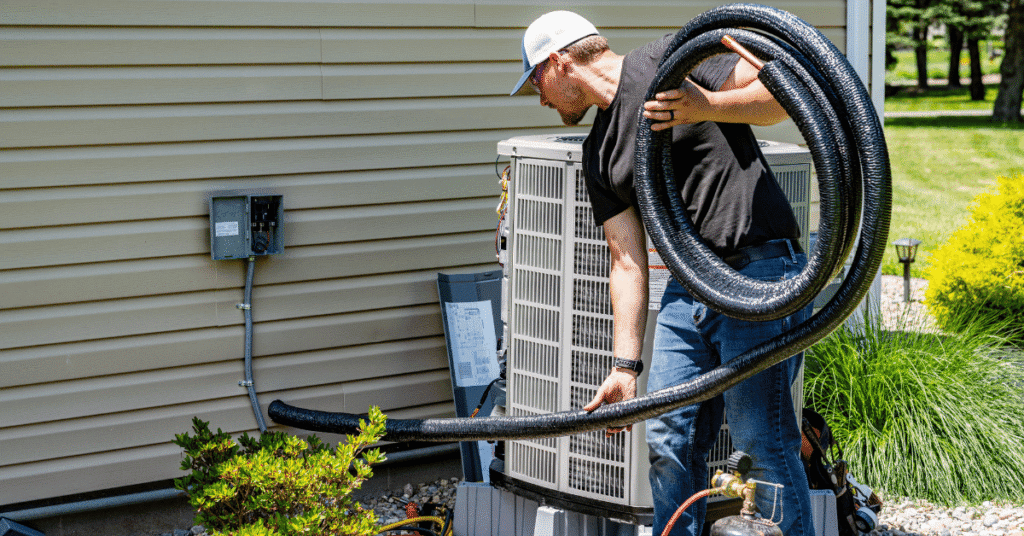
Heat pumps are shown in HVAC diagrams as dual-purpose equipment. They can provide heating and cooling in one unit. Many homeowners now choose heat pump installation for efficient year-round comfort.
Ductwork and Air Distribution
Diagrams always map out the duct system. A poor HVAC duct layout can affect airflow. Common issues like leaks or blockages may require ductwork repair. Proper system maintenance and cleaning improve efficiency.
Thermostat and Controls
Located at the center of many diagrams, the thermostat is the control hub. Whether basic or smart, it communicates with the furnace or air conditioner to regulate heating and air conditioning.
Indoor Air Quality Add-Ons
Modern HVAC design often includes IAQ equipment:
- Humidifiers and dehumidifiers.
- Filters and purifiers that improve indoor air quality.
- Damper controls for zoning.
Reading HVAC Drawings and Blueprints
While mechanical drawings may look complex, here’s how to understand the HVAC system:
- Follow airflow arrows to see how hot air or cool air circulates.
- Track refrigerant lines between indoor and outdoor equipment.
- Check HVAC symbols for different components of an HVAC system.
- Note zoning areas if your home has multiple thermostats.
Reading HVAC drawings gives you confidence to communicate with contractors about repair or installation.
Why Understanding the HVAC System Matters
Knowing your HVAC system components provides benefits:
- Recognize when cleaning or repair is needed.
- Identify warning signs like unusual noises, blocked ducts, or short cycling.
- Make informed decisions about replacement or new installation.
- Protect indoor and outdoor HVAC equipment with routine system maintenance.
An informed homeowner can extend the lifespan of heating and cooling systems and improve air quality.
Common Issues Found in HVAC System Work
HVAC system diagrams also highlight where breakdowns may occur:
- Leaky ducts wasting energy.
- Frozen coils from low refrigerant.
- Dirty filters restricting airflow.
- Faulty pump or condenser leading to poor air conditioning system performance.
Understanding these weak points helps you take early action with professional HVAC repair.
Professional vs DIY System Maintenance
Some basic components of HVAC can be managed by homeowners, while others require professional HVAC service.
DIY tasks: filter cleaning, keeping outdoor units clear, thermostat checks.
Professional-only tasks: refrigerant handling, sealing ductwork, electrical diagrams repair, and major HVAC installation.
Certified technicians with HVAC drawings and blueprints training ensure safe repair, installation, and ongoing system maintenance.
Choosing a Professional HVAC Contractor in Livonia, MI
Michigan’s building design demands HVAC systems that perform in all seasons. Choosing a trusted contractor is key. Look for one who provides:
- Heating and air conditioning repair.
- Furnace installation and air conditioner installation.
- Heat pump installation.
- Ductwork repair and ventilation improvements.
- Emergency HVAC service.
Comfort Craftsman Heating and Cooling offers certified technicians, professional HVAC services, and clear pricing.
Conclusion
An HVAC system diagram is not just a schematic it’s a useful guide to understand how different components of an HVAC system work together. By learning about the basic components like furnace, air conditioner, heat pump, ductwork, AHU, condenser, and thermostat, you can recognize issues early, plan proper system maintenance, and ensure heating and cooling comfort all year long.
