

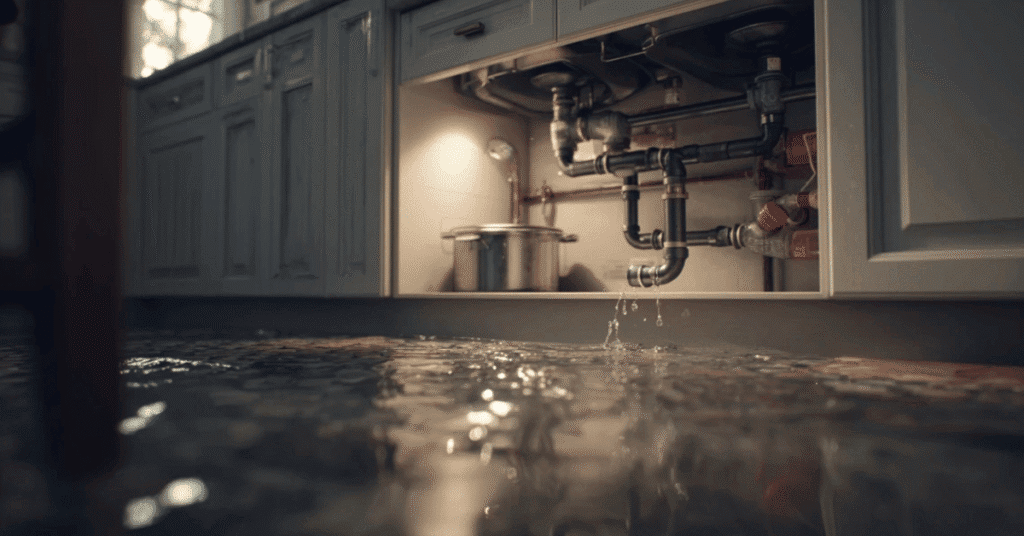
You’re doing dishes after dinner, and suddenly you notice water pooling under your sink. You open the cabinet door, and there it is: water leaking from your garbage disposal. It’s one of those plumbing issues that seems small at first but can quickly turn into a bigger headache if left unaddressed.
Garbage disposal leaks are more common than you might think, especially in older homes throughout Livonia, MI. The good news? Most leaks happen for predictable reasons, and many can be fixed without needing to install a new garbage disposal. Understanding the common reasons why you have water leaking from your garbage disposal can help you decide whether it’s a quick DIY repair or time to call a professional plumber.
#1 Faulty Seal
The seal between your garbage disposal and the kitchen sink is one of the most common leak points. This connection relies on a combination of the mounting assembly, putty, and rubber gasket to create a watertight seal. Over time, these materials break down, especially if your disposal unit has been in place for several years due to regular use and wear and tear.
When the seal at the top of your disposal fails, you’ll typically notice your garbage disposal leaking from the top where the disposal meets the sink drain. Temperature changes in your kitchen and vibration from the disposal motor contribute to seal deterioration.
Common causes of sink flange seal failure:
- Age and normal wear from years of operation
- Improper initial installation with insufficient putty around the disposal flange
- Vibration from the disposal motor loosening the connection at the loose sink flange
- Dried-out putty that has lost its flexibility and creates gaps
- Worn or damaged seals that no longer create a proper barrier
If you catch this early, you might be able to tighten the screws to create a better seal. However, if the putty has completely dried out, you’ll need to disconnect the disposal, clean off the old material, and reapply fresh putty for proper installation.
#2 Loose Drain Lines
Your garbage disposal has multiple connection points where pipes and hoses attach, and any of these can develop leaks. The two most problematic areas are the dishwasher drain connection and the discharge drain pipe. The dishwasher hose connects your garbage disposal to your dishwasher and is typically connected by a metal clamp to secure the rubber hose.
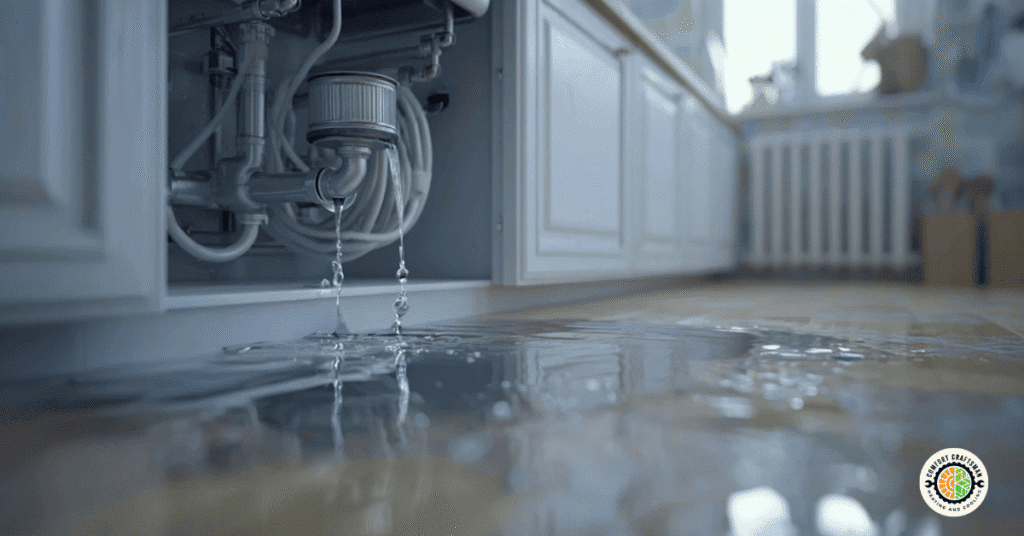
Over time, these clamps can loosen, or the rubber hose itself can crack and deteriorate, causing a disposal leaking from the side. The two drain lines (one from the dishwasher and one main drain line) are particularly vulnerable to becoming loose drain connections.
Signs of loose drain line leaks:
- Water appears only during specific activities like running the dishwasher
- Drips coming from visible pipe connections on the disposal sides
- Wet spots that track back to the dishwasher hose or drain connections
- Corrosion and rust around connection areas
- Leaking from the side where hoses attach
Tightening these connections is often straightforward for basic cleaning and repair. For the dishwasher hose, you can use a screwdriver to tighten the clamp. For the discharge pipe, you may need to tighten the mounting bolts. Just be careful not to overtighten, as this can crack the disposal housing or damage the gasket.
#3 Cracked Disposal Body
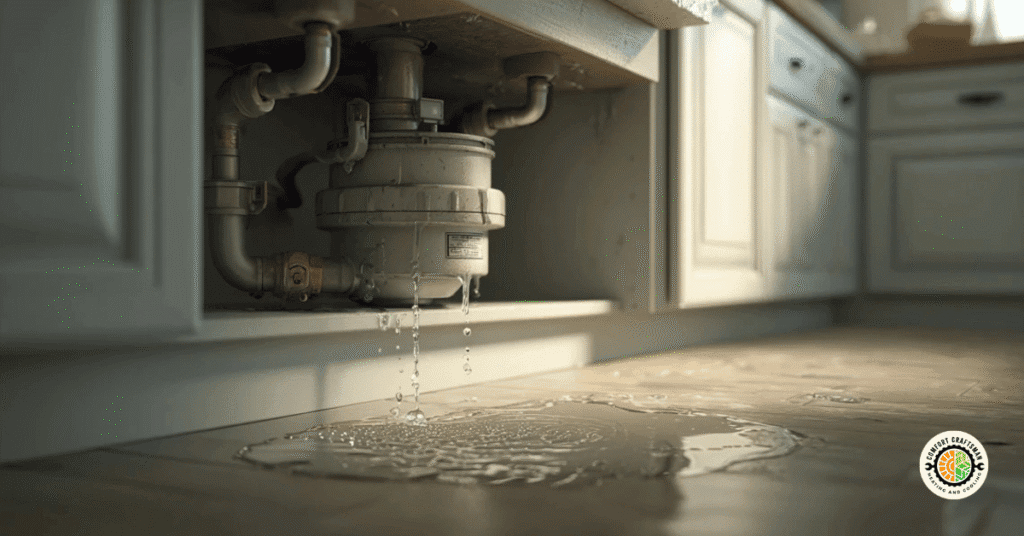
Sometimes the problem isn’t with the connections but with the garbage disposal unit itself. The disposal body is typically made of metal or heavy-duty plastic, but it’s not indestructible. A cracked disposal can develop for several reasons, and unfortunately, when the body cracks, it’s time to replace your entire unit.
Garbage disposals take a beating over their lifespan. They handle constant exposure to water, food waste, cleaning chemicals, and vibration. Internal seals can corrode, particularly in areas with hard water like many parts of Michigan. Sometimes garbage disposals simply reach the end of their useful life and need to be replaced.
Warning signs of a cracked disposal:
- Water leaking from the main body of the unit, not from connection points
- Visible cracks in the disposal housing indicating structural failure
- Age of the unit (10+ years old) showing significant wear
- Previous repair history with recurring garbage disposal problems
- Rust visible on the exterior despite regular cleaning
- Leakage that worsens when you turn on the disposal
When the disposal body itself fails, there’s no practical repair option. The unit needs replacement. This is similar to how we think about aging HVAC equipment at Comfort Craftsman. Sometimes continuing to repair old equipment costs more in the long run than investing in a new, efficient replacement with professional installation.
#4 Clogged Drain
Here’s a leak cause that surprises many homeowners: sometimes what looks like a leak is actually a backup caused by a clog in your drain. When the drain line gets blocked, water can’t exit the disposal properly. The pressure builds up and forces water down the drain or out through any weak point in the system, causing a leaky garbage disposal situation.
Clogs develop when the wrong materials go down using your garbage disposal or when food particles accumulate in the drain pipe over time. Grease is a major culprit. It goes down as a liquid but solidifies as it cools in your pipes, creating stubborn blockages that can cause your garbage disposal to leak.
Signs of a clog-related leak:
- Water backing up into the sink when the disposal runs
- Slow drainage even when the disposal isn’t running
- Gurgling sounds from the drain indicating air trapped by the clog
- Foul odors coming from the disposal due to trapped debris
- Leaks that seem to worsen when water is running
- Water pooling around the blades inside the unit
Addressing a clog-related leaking issue means clearing the blockage through proper cleaning and repair. You can try running hot water through the disposal, using a plunger specifically for sinks, or using a drain snake. Avoid chemical drain cleaners if possible, as these can damage your disposal and pipes.
When to Replace Your Garbage Disposal
Knowing when to repair versus replace can save you money and prevent further damage. Consider replacement if your garbage disposal is more than 10 years old, has required multiple repairs in the past year, or has a cracked body. If you notice your garbage disposal leaking from multiple points or if the leak is coming from internal components, it’s time to call a professional plumber.
Modern garbage disposals are more efficient and quieter than older models. When you hire a professional for installation, it ensures proper sealing and connection to prevent future leaks. Just like with heating and cooling systems, regular maintenance extends the life of your disposal unit and helps identify the source of potential problems before they lead to leaks and water damage.
Contact Comfort Craftsman
If you’re dealing with a stubborn garbage disposal leak or any other home maintenance issue in Livonia, MI, Comfort Craftsman is here to help. While we specialize in heating and cooling solutions, we understand that home comfort goes beyond temperature control.
Our team believes in honest assessments and fair pricing. We won’t recommend a replacement if a simple repair will do the job, and we’ll always explain your options clearly so you can make the best decision for your home and budget. Whether you need a reliable garbage disposal installation or help fixing a leaking garbage disposal, we’re just a call away.